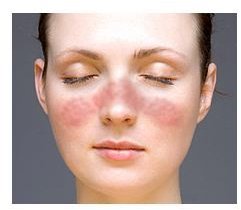
The lupus facial rash is also referred to as a butterfly rash or malar rash. Learn more about this lupus symptom in this guide.
Diagnostic Criteria
The American College of Rheumatology criteria for lupus diagnosis are as follows:The lupus facial rash is one of the 11 diagnostic criteria outlined by the American College of Rheumatology. In order for a doctor to make a lupus diagnosis, you must have a minimum of four out of the 11 criteria on the list. These criteria do not have to occur at the same time; they can occur at any time in your life.
-
Lupus facial rash that takes on a butterfly shape; this rash spreads across the cheeks and bridge of the nose
-
Sunlight sensitivity; rashes that occur due to sunlight exposure are a lupus symptom
-
Positive blood tests for autoimmune diseases
Advertisement -
Positive ANA (antinuclear antibody) test
-
Mouth ulcers, which are usually painless
-
Discoid rash; this rash appears as raised, scaly patches on the skin
-
Arthritis that affects at least two joints and causes swelling or pain
-
Pleuritis or pericarditis (referred to as serositis)
-
Seizures, psychosis or other neurological disorders
Advertisement -
Renal disease characterized by casts or protein in the urine
-
Blood disorders such as low white blood cell count, low platelet count, and hemolytic anemia
Treatment
Topical corticosteroids treat the lupus facial rash and other skin rashes caused by lupus. These drugs reduce inflammation in the skin cells so that rashes improve. Avoid sunlight exposure by wearing sunscreen and protective clothing like hats, gloves and long-sleeved shirts. Oral medications are given for severe rashes. Because these drugs have side effects, they should be used with caution in anyone who has a compromised immune system, kidney disease, liver disease or other serious medical condition.
Several drugs treat lupus and its symptoms. Nonsteroidal anti-inflammatory drugs reduce pain and inflammation, allowing lupus patients greater range of motion and a better quality of life. Corticosteroids also reduce inflammation. Unfortunately, these drugs increase the risk of osteoporosis and may cause weight gain, high blood pressure, increased risk of infection and diabetes. To avoid these risks, your doctor will give you the lowest dose that reduces pain. Anti-malarial drugs seem to prevent lupus flare-ups and treat the symptoms of lupus. These drugs can cause muscle weakness and vision problems.
Image Credit: https://commons.wikimedia.org/wiki/File:Lupus _facial_rash.jpg