Gallstones may be present in the gallbladder if liquid bile has too much bile salts, cholesterol or bilirubin. Find out several symptoms of gallstones based on the types of gallstones.
What are Gallstones?
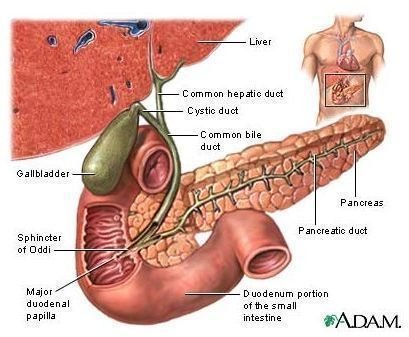
Gallstones are small, hardened particles of digestive fluid that are present in the gallbladder, made of cholesterol and fatty materials that have been consumed. The gallbladder is a pear-shaped organ located in the upper right part of the abdomen just below the rib cage on the right side. Click on image to enlarge.
The gallbladder is included in the biliary system besides the pancreas and the liver. The biliary system generates the liquid bile to help digest high-cholesterol intake. Bile consists of cholesterol, water, bile salts, fats, proteins, and bilirubin. Bile salts separate fat, and bilirubin provides bile and stool with a yellowish-brown color. The liquid bile might turn into gallstones if it has too much bile salts, cholesterol, or bilirubin.
There are three common types of gallstones:
- Asymptomatic gallstones, or silent gallstones, are stones in the gallbladder that do not result in symptoms.
- Complicated gallstones are stones in the gallbladder that lead to complications such as pancreatitis (pancreas inflammation), cholecystitis (gallbladder inflammation), and cholangitis (bile duct inflammation).
- Uncomplicated gallstones are stones in the gallbladder that obstruct the opening of the bile duct.
Below are several symptoms of gallstones based on their types:
Complicated Gallstone Disease
Complicated gallstone disease might lead to three typical complications including:
Acute pancreatitis
This complication occurs when a gallstone leaves your gallbladder, clogs the duct (opening) of the pancreas, and leads to an inflammation. Acute pancreatitis is characterized by severe pain in the center of the upper abdomen and the back after meals. Some other symptoms that may happen include diarrhea, fever of 100 degrees Fahrenheit or higher, loss of appetite, nausea, vomiting, abdominal tenderness, and jaundice (yellow discoloration of the white of the eyes and the skin).
Acute cholecystitis
A gallstone may hamper one of the bile ducts, leading to acute cholecystitis. If this occurs, the swelling and inflammation of the gallbladder can follow obstruction. You might experience constant pain in your upper abdomen for more than five hours, a rapid heartbeat, and fever of 100 degrees Fahrenheit or higher. Jaundice might be also present in some people. Your doctor might recommend gallbladder removal if you have acute cholecystitis.
Acute cholangitis
Acute cholangitis refers to an inflammation of the bile ducts due to the bile duct obstruction. As a gallstone clogs the bile ducts, a bacterial infection occurs and causes bile ducts to get inflamed. Possible symptoms that might occur include severe pain in your upper abdomen and shoulder blade, chills, jaundice, lethargy, itchy skin, and high fever.
Uncomplicated Gallstone Disease
Uncomplicated gallstone disease is characterized by the presence of an intense, severe pain that subsides within five hours. This pain is known as biliary colic, or biliary pain, or gallstone pain. This pain might occur in the upper right of the abdomen spreading to the shoulder blade. You can also experience severe pain in the right upper abdomen, just below the lower ribs. Other symptoms are sweating, nausea, and vomiting. Consuming fatty foods would surely trigger biliary colic, as the gallbladder contracts and pressures the stones. This eventually hampers the opening of the gallbladder.
References
eMedicinehealth.com: Gallstones Overview - https://www.emedicinehealth.com/gallstones/article _em.htm
cks.nhs.uk: Gallstones - https://www.cks.nhs.uk/patient _information_leaflet/gallstones
The National Digestive Diseases Information Clearinghouse: Gallstones - https://digestive.niddk.nih.gov/ddiseases/pubs/gallstones/
Photo Credit
Image courtesy of the National Library of Medicine.