Proper meal prep food safety practices help busy individuals prevent foodborne illness by ensuring safe handling, storage, and reheating of meals throughout the week.
Meal prepping is a popular strategy to save time and maintain a nutritious diet during hectic weekdays. However, without proper food safety practices, meal prepping can increase the risk of foodborne illness. Understanding and applying basic food safety principles ensures your meals stay safe and delicious throughout the week.
Choose Safe Ingredients and Plan Ahead
Start your meal prep by selecting fresh, high-quality ingredients. When grocery shopping, check expiration dates on perishable items like dairy, meat, and seafood. Choose produce that is firm and free of bruises or mold. Planning meals that include a variety of vegetables, whole grains, and lean proteins aligns with heart-healthy recommendations and supports overall wellness.
Before you begin cooking, make sure your hands, utensils, and work surfaces are clean. Wash fresh fruits and vegetables under running water to remove dirt and potential contaminants. Avoid washing raw meat or poultry to prevent cross-contamination; instead, cook them thoroughly to safe internal temperatures.
Cook Foods to Safe Temperatures
Cooking foods to the correct internal temperature kills harmful bacteria that can cause food poisoning. Use a food thermometer to check doneness rather than relying on color or texture alone. For example, poultry should reach 165F, ground meats 160F, and fish 145F. Cooking large batches of food evenly helps prevent cold spots where bacteria can survive.
If you’re preparing multiple dishes, cook raw meats separately from vegetables to minimize cross-contamination. After cooking, promptly transfer food to clean containers to begin cooling.
Cool and Store Meals Properly
Proper cooling is critical to prevent bacterial growth. Hot foods should be refrigerated within two hours of cooking, or within one hour if the ambient temperature is above 90F. To speed cooling, divide large portions into smaller shallow containers and leave lids slightly off until cooled.
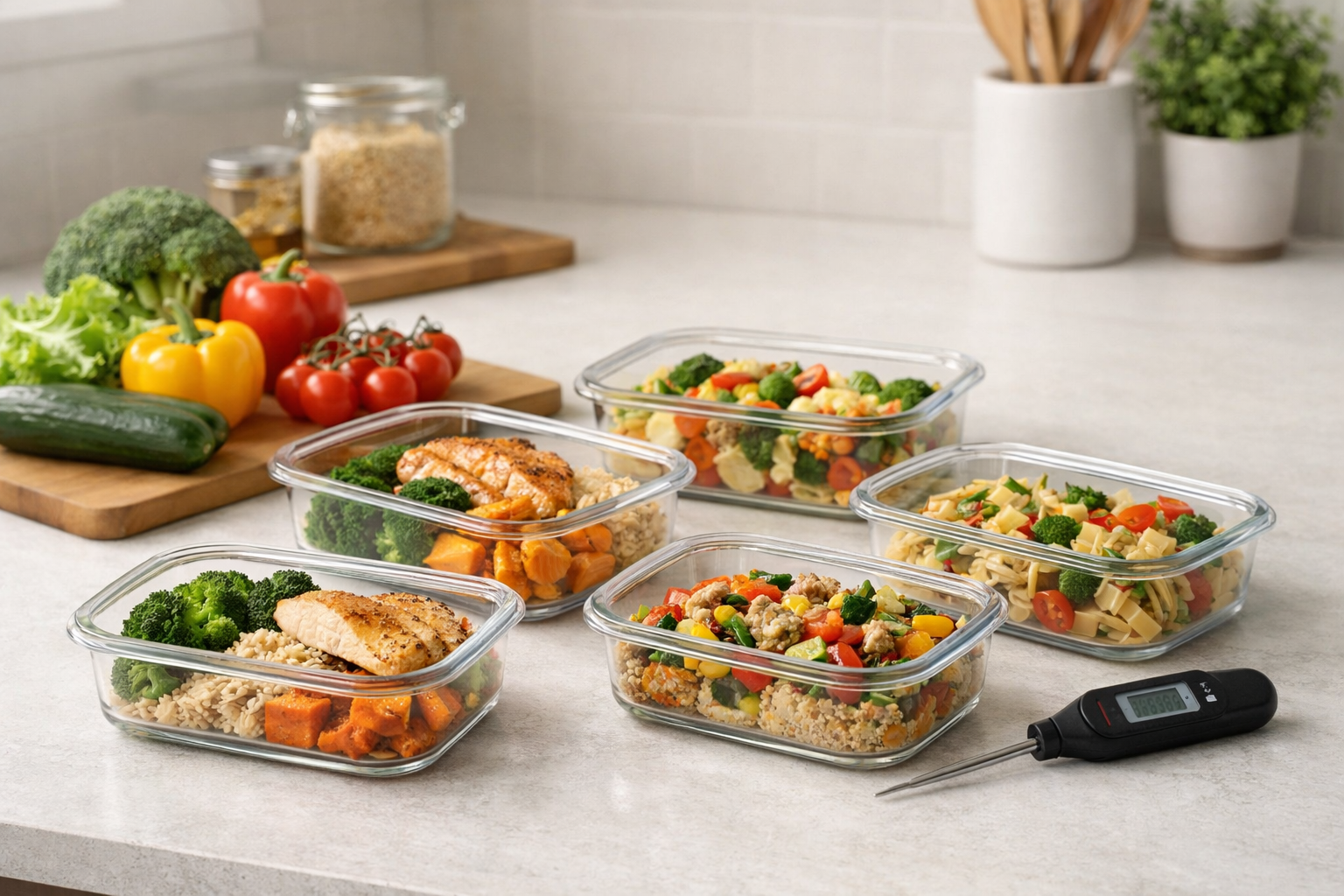
Store prepped meals in airtight containers to maintain freshness and prevent odors from spreading. Label each container with the preparation date to track storage time. The USDA recommends using refrigerated leftovers within 3 to 4 days or freezing them for longer storage.
Keep your refrigerator temperature at or below 40F and your freezer at 0F. Check temperatures regularly with a refrigerator thermometer to ensure safe storage conditions.
Practice Safe Reheating Techniques
When reheating prepped meals, heat them to an internal temperature of 165F to kill any bacteria that may have developed during storage. Use a food thermometer to verify the temperature, especially for dense or thick dishes.
Microwaves are convenient but can heat unevenly. Stir food halfway through heating and let it stand for a minute or two to allow heat to distribute evenly. Avoid reheating leftovers more than once, as repeated cooling and reheating increase the risk of bacterial growth.
Maintain Cleanliness to Avoid Cross-Contamination
Cross-contamination occurs when harmful bacteria transfer from one food or surface to another. Prevent this by using separate cutting boards for raw meats and produce. Wash knives, cutting boards, and countertops thoroughly with hot, soapy water after each use.
Keep raw meat, poultry, and seafood separate from ready-to-eat foods both in the refrigerator and while preparing meals. Use sealed containers or plastic bags to store raw proteins on the bottom shelf of the fridge to prevent juices from dripping onto other foods.
Monitor Your Hydration and Meal Timing
Staying hydrated is a key part of overall health, especially when managing a busy schedule. Water is the best choice for hydration and a low-calorie alternative to sugary drinks. Drink water before, during, and after meals to support digestion and maintain energy levels.
Planning meal times consistently can also support better digestion and healthier sleep patterns. Avoid heavy meals close to bedtime to prevent discomfort and disrupted sleep.
Practical Tips for Busy Weekday Meal Prep
- Use meal prep containers that are microwave and dishwasher safe for convenience.
- Portion meals according to serving size guidance on Nutrition Facts labels to avoid overeating.
- Incorporate a variety of colorful vegetables and lean proteins to keep meals balanced and interesting.
- Keep a cooler bag handy if you need to transport meals, ensuring they stay below 40F until refrigerated.
By integrating these food safety basics into your meal prep routine, you can reduce foodborne illness risk and enjoy nutritious, convenient meals throughout your busy week. Remember to consult a qualified healthcare provider for personalized advice regarding diet, hydration, or any health concerns related to food preparation and consumption.